Takoyaki — Osaka's Octopus Balls
How to make takoyaki at home: batter, octopus, the special pan, and the sauces and toppings.
What takoyaki is
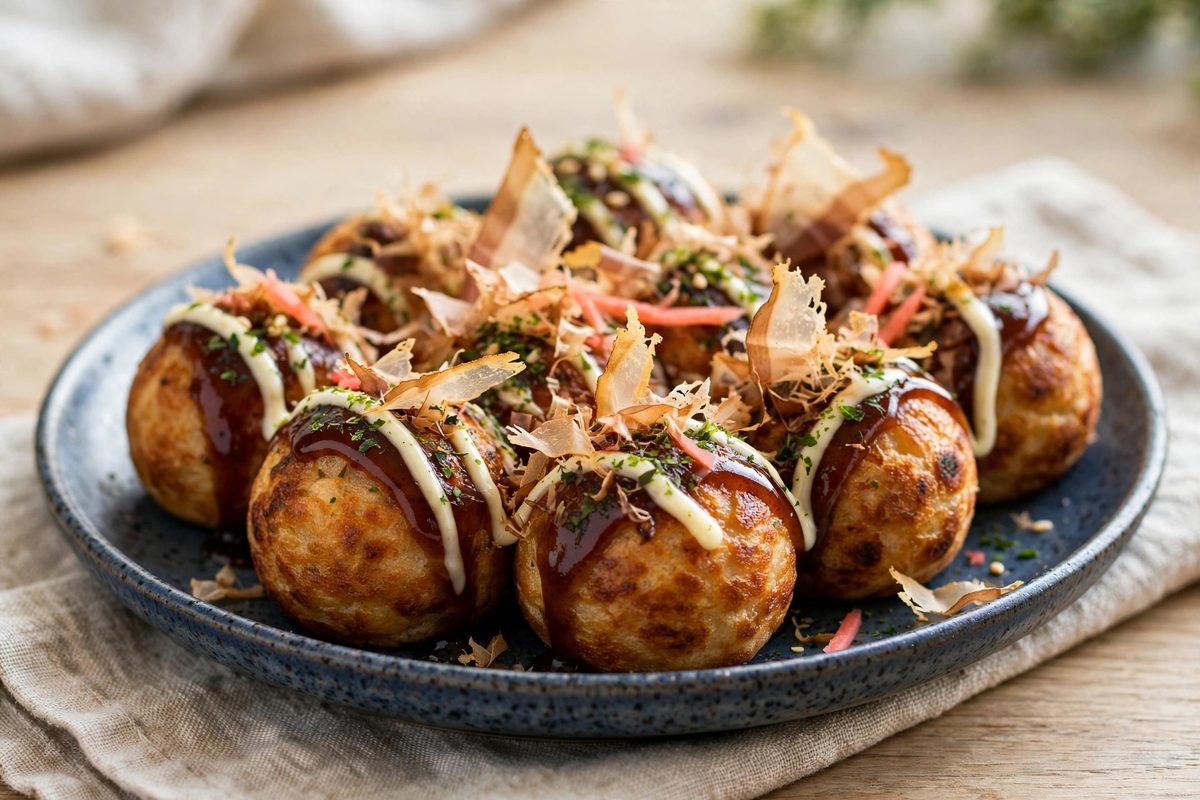
Takoyaki are round, golden balls of batter filled with pieces of octopus, cooked in a special moulded pan, and topped with sauce, mayonnaise, bonito flakes, and seaweed. They are Osaka's most famous street food, sold from stalls and eaten hot with toothpicks, and they are crisp outside, soft and creamy inside, with a savoury bite of octopus in the centre. Making them at home needs the special pan, called a takoyaki pan, but once you have it, the recipe is quick and the results are very close to the street stalls.
The pan and the batter
A takoyaki pan is a heavy pan with round half-sphere moulds, used on the stove or as an electric appliance. The batter is a thin mix of flour, eggs, and dashi, similar to okonomiyaki batter but thinner. Pour the batter into the oiled moulds, add a piece of octopus to each, plus spring onion and pickled ginger, and top up with a little more batter. The batter should be thin enough to flow and fill the moulds evenly. Keep the pan well oiled so the balls release easily when you turn them.
The octopus and fillings
Use cooked octopus, cut into small pieces about one centimetre across. Fresh or frozen cooked octopus both work; thaw frozen octopus fully and pat it dry. If you cannot find octopus, prawns, cheese, or mushrooms make good substitutes, though the classic version uses octopus. Add the filling pieces to the batter while it is still liquid, so they sit in the centre of each ball. A little tempura scraps, called tenkasu, added to the batter gives a light, crisp texture, and is a traditional addition worth including if you can find it.
Cooking and turning
Cook over medium-high heat for about three to four minutes, until the bottoms set and turn golden. Then turn each ball ninety degrees with a skewer or chopsticks, tucking the loose batter underneath to form a round shape. Turn again after another minute or two, until the balls are round and golden all over. The turning is the skill: work quickly, turn all the balls in sequence, and do not worry if the first batch is uneven. The balls should be crisp outside and soft, almost creamy, inside, with the octopus hot in the centre.
Sauces and toppings
Brush the hot balls with takoyaki sauce, a thick sweet-savoury sauce similar to okonomiyaki sauce, then drizzle with Japanese mayonnaise in thin lines, and scatter dried bonito flakes and aonori seaweed over the top. The bonito flakes will curl in the heat. Serve the takoyaki on a plate or in a paper boat, with toothpicks for eating. They are very hot inside, so warn people to take a small first bite. The toppings are essential: plain takoyaki without sauce tastes flat by comparison.
Serving and variations
Takoyaki are best eaten immediately, straight from the pan, while the outside is crisp and the inside is soft. They are party food, so make them in batches and serve as you go. Variations include cheese takoyaki, where a small cube of cheese melts inside, and prawn takoyaki. Leftover takoyaki do not reheat well, so make only as many as you will eat. A takoyaki pan is a small investment, but it turns a weekend afternoon into a fun, hands-on cooking session, and the results are worth it.
Frequently Asked Questions
Do I need a special pan for takoyaki?
Yes, a takoyaki pan with round moulds is needed to form the balls. Stovetop and electric versions are both available and inexpensive.
Can I make takoyaki without octopus?
Yes. Prawns, cheese, mushrooms, or sausage all work as fillings. The classic version uses octopus, but the method is the same for any filling.
Why are my takoyaki not round?
The batter may be too thick, or the balls were not turned at the right time. Use a thin batter, turn the balls when the bottoms are set, and tuck the loose batter under with a skewer.