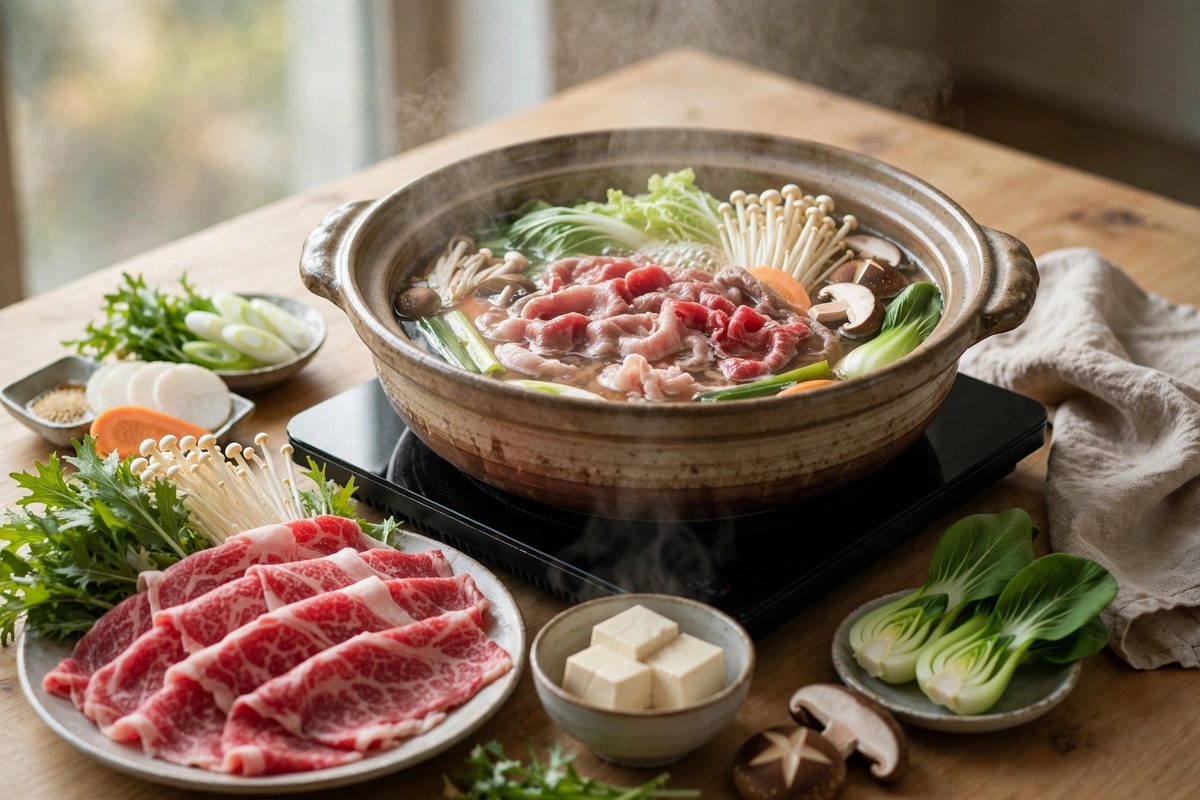
Shabu-Shabu — Japanese Hot Pot at Home
How to make shabu-shabu: broth, thinly sliced meat, vegetables, dipping sauces, and the finishing noodles.
What shabu-shabu is
Shabu-shabu is a Japanese hot pot where very thinly sliced meat and vegetables are cooked by swishing them briefly in a pot of simmering broth at the table, then dipped in sauce and eaten. The name imitates the sound of the meat moving through the water: shabu-shabu. It is a social, interactive meal, cooked a little at a time and eaten as you go, and it is lighter than most hot pots because the broth is a simple kombu dashi and the cooking is quick. It is an ideal dish for a gathering, because the cooking itself is the entertainment.
The broth
The broth is usually a simple kombu dashi: water with a piece of kombu, heated gently. Some versions add a little sake or a piece of ginger. Keep the broth at a gentle simmer, not a rolling boil, so the meat cooks gently and the broth stays clear. The pot sits in the centre of the table on a portable burner, and everyone cooks their own food. As the meal goes on, the broth gains flavour from the meat and vegetables, and at the end it is often used to cook noodles or rice porridge, so nothing is wasted.
Meat and vegetables
The meat must be sliced paper-thin, which is easiest when it is partly frozen. Beef is the classic choice, but pork is also excellent and a little cheaper. Ask a butcher to slice it thinly if you cannot do it yourself. Vegetables include napa cabbage, mushrooms, spring onion, carrots, and tofu, cut into bite-sized pieces. Arrange everything on platters around the pot so people can reach it easily. A mix of three or four vegetables plus one or two proteins gives a good balance without overwhelming the table.
How to cook at the table
Hold a slice of meat with chopsticks and swish it in the simmering broth for a few seconds until it changes colour, then lift it out, dip it in sauce, and eat it. Vegetables take longer: leafy greens need a minute or two, root vegetables and mushrooms a little longer, and tofu a couple of minutes. Cook a few pieces at a time rather than filling the pot, because overcrowding drops the temperature. Skim off any foam from the surface with a small strainer to keep the broth clear and clean-tasting.
Dipping sauces
Two sauces are traditional: ponzu, a citrus and soy sauce that is light and tangy, and goma-dare, a creamy sesame sauce that is rich and nutty. Serve both in small bowls, with grated daikon, spring onion, and chilli to add as you like. Ponzu suits vegetables and lighter meats, while sesame sauce suits beef. Offer both so everyone can choose. Bottled ponzu and sesame sauce are widely available, and homemade versions are simple: ponzu is soy sauce with citrus juice and dashi, and sesame sauce is ground sesame with soy sauce, sugar, and dashi.
Finishing the meal
When the meat and vegetables are finished, the broth is full of flavour. Add udon noodles or cook rice in it to make a porridge called zosui, with a beaten egg stirred in at the end. This finishing course is an important part of shabu-shabu, so save room for it. Serve the meal with steamed rice on the side if people want it, and keep drinks simple. Shabu-shabu is a slow meal, so allow at least an hour, and enjoy the pace: the cooking, the dipping, and the conversation are the point.
Frequently Asked Questions
What meat is best for shabu-shabu?
Thinly sliced beef is classic, and pork is a good, cheaper alternative. The key is very thin slicing — partly freeze the meat first, or ask a butcher to slice it for you.
What sauces do I serve with shabu-shabu?
Ponzu (citrus-soy) and goma-dare (sesame) are the two traditional sauces. Serve both, with grated daikon, spring onion, and chilli on the side.
Can I make shabu-shabu vegetarian?
Yes. Use a kombu and mushroom broth, and cook tofu, mushrooms, leafy greens, and root vegetables. The dipping sauces work just as well without meat.