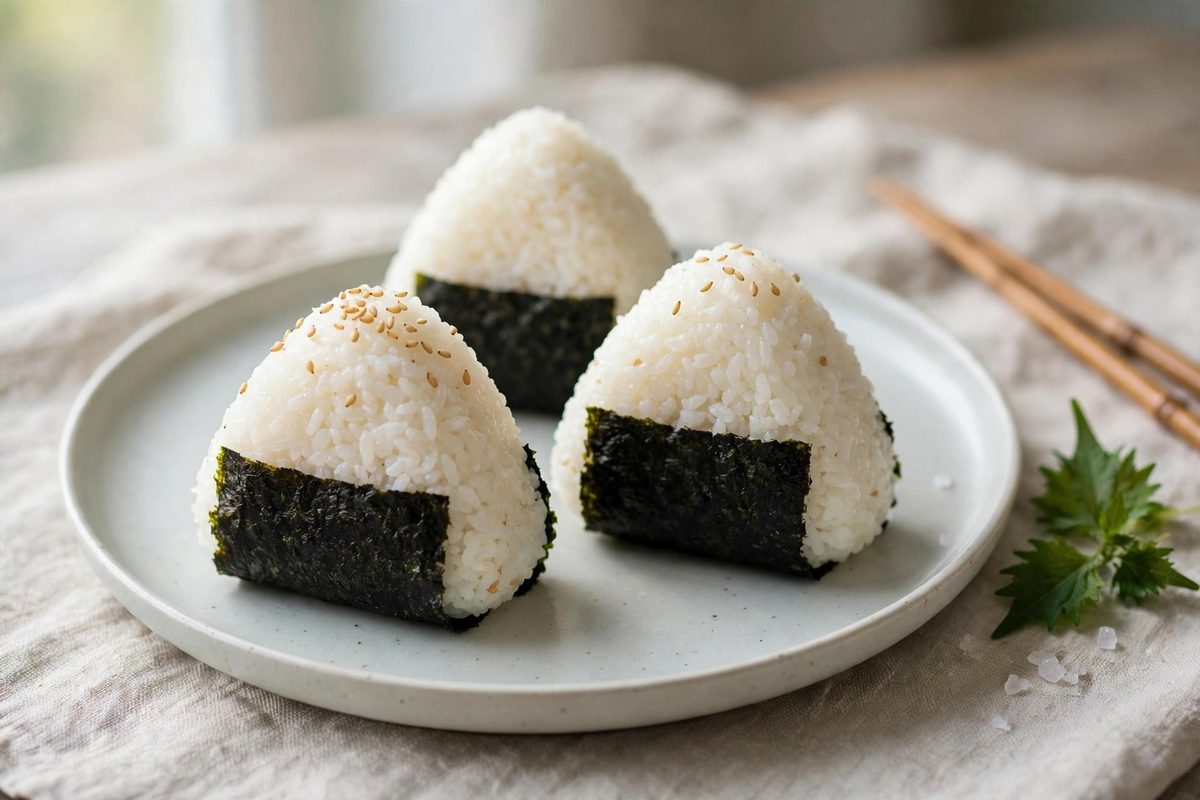
Onigiri — Japanese Rice Balls
How to make onigiri: rice, fillings, shaping, and wrapping, plus the best fillings for beginners.
What onigiri are
Onigiri are rice balls, usually triangular, made from plain steamed rice and filled or mixed with savoury ingredients, then wrapped in a sheet of nori seaweed. They are Japan's most portable food: lunch boxes, picnics, train journeys, and school lunches all feature onigiri. They are simple, cheap, and endlessly variable. The rice is the star, so good short-grain rice, cooked well and seasoned lightly with salt, matters more than any filling. Onigiri are a good first Japanese dish to make, because they need no special equipment and are hard to get wrong.
The rice
Use freshly cooked short-grain rice, still warm, and handle it while it is warm but not too hot to touch. The rice should be a little firmer than usual, so use slightly less water than normal, about a 1 to 1.1 ratio. Do not season the rice with vinegar, as you would for sushi; onigiri rice is plain, with salt on your hands for seasoning. Keep a bowl of water nearby to wet your hands, so the rice does not stick. Warm rice shapes easily and holds together; cold rice crumbles.
Fillings for beginners
The classic fillings are salted salmon, umeboshi (pickled plum), tuna mixed with mayonnaise, and kombu seaweed simmered in soy sauce. Start with tuna mayonnaise or salted salmon, which are easy and reliable. Use about a tablespoon of filling per rice ball, and bury it in the centre so it does not leak out. Other good fillings include cooked chicken, pickled vegetables, and seasoned minced beef. Avoid wet fillings, which make the rice fall apart, and avoid large pieces, which poke through the surface.
Shaping
Wet your hands, sprinkle them with a little salt, and take a handful of rice about the size of a small orange. Make a dent in the centre, add the filling, and cover it with more rice. Shape the rice into a triangle by pressing gently with both hands, rotating the ball as you go. Press firmly enough that it holds together, but not so hard that the grains crush. A plastic onigiri mould makes this easier, but hands work fine and give a better feel for the pressure. Wrap a strip of nori around the base, or a full sheet, just before eating, so it stays crisp.
Wrapping and storing
Wrap onigiri in cling film if you are taking them out, and keep the nori separate until eating time if you want it crisp. Onigiri are best eaten within a few hours, at room temperature. They keep in the fridge overnight, but the rice firms up, so bring them back to room temperature before eating. Do not freeze finished onigiri. If you make them for a lunch box, add a small pickled vegetable or a piece of fruit alongside for colour and balance.
Onigiri for lunch boxes
Onigiri are the centrepiece of many Japanese lunch boxes. Make two or three with different fillings, add a small portion of vegetables, a rolled omelette, and some fruit, and you have a complete, portable meal. Children often prefer simple fillings such as tuna mayonnaise or salmon, while adults may like umeboshi or kombu. Making onigiri together is a good family activity: set out bowls of rice and fillings, and let everyone shape their own.
Frequently Asked Questions
What rice should I use for onigiri?
Short-grain Japanese rice, freshly cooked and still warm. Long-grain rice does not stick together well enough to hold a shape.
How do I stop onigiri falling apart?
Use warm, freshly cooked rice, wet your hands, and press firmly but gently. If the rice is cold or too dry, it will crumble — cook a fresh batch.
How long do onigiri keep?
Eat them within a few hours at room temperature, or within a day if refrigerated. Bring refrigerated onigiri back to room temperature before eating, as cold rice is firm and dry.