Okonomiyaki — Japan's Savoury Pancake
How to make okonomiyaki at home: batter, cabbage, toppings, and the sauces that make it special.
What okonomiyaki is
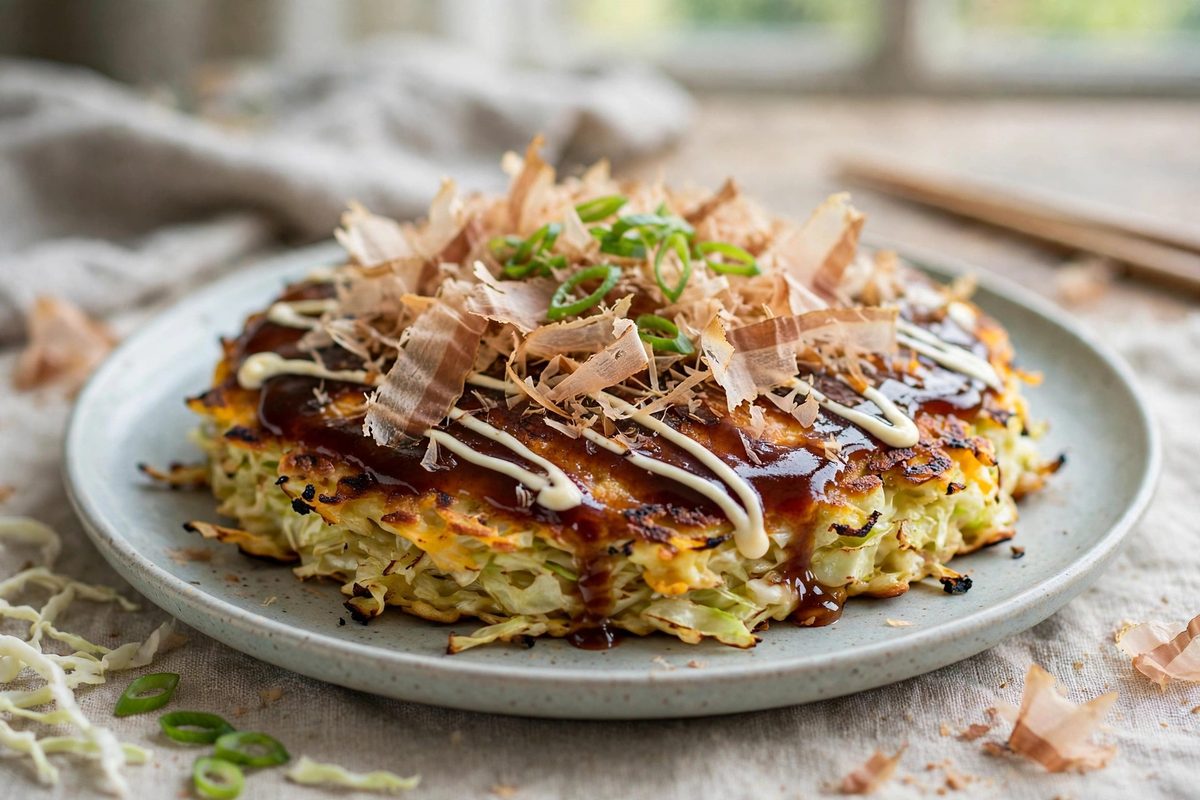
Okonomiyaki is a savoury pancake made from a batter of flour, eggs, and dashi, mixed with shredded cabbage and cooked on a griddle. The name means roughly grilled as you like it, and the dish lives up to that: the filling can be pork, prawns, squid, cheese, or vegetables. It is a specialty of Osaka and Hiroshima, and the two styles differ: Osaka mixes everything into the batter, while Hiroshima layers the ingredients and adds noodles. This guide covers the Osaka style, which is easier at home and just as satisfying.
The batter and cabbage
The batter is simple: plain flour, eggs, dashi, and a little baking powder, mixed until just combined. The key ingredient is cabbage, finely shredded, which makes up most of the pancake's volume. Use about four times as much cabbage as batter by volume. Mix the cabbage in just before cooking so it stays crisp, and do not overmix the batter, because that makes the pancake tough. A little grated yam is traditional and adds lightness, but it is optional and the pancake works well without it.
Fillings and cooking
Lay your filling on the griddle first if using sliced pork belly, then pour the batter and cabbage mixture over it so the pork cooks into the top. For prawns or squid, mix them into the batter instead. Cook on medium heat for about four to five minutes per side, flipping once with two spatulas. The pancake should be golden brown outside and cooked through inside, with the cabbage tender but not mushy. A lid over the pan for the first few minutes helps the centre cook. Make the pancakes one at a time for the best results.
Sauces and toppings
The classic finish is okonomiyaki sauce, a thick, sweet-savoury sauce similar to a fruity brown sauce, spread over the top, followed by Japanese mayonnaise in thin lines, dried bonito flakes, and aonori seaweed flakes. The bonito flakes curl and move in the heat, which is part of the fun. Pickled ginger adds a sharp contrast. If you cannot find okonomiyaki sauce, a mix of tomato ketchup, Worcestershire sauce, and a little soy sauce is a reasonable substitute. Do not skip the toppings: they are what turn a cabbage pancake into okonomiyaki.
Hiroshima style
Hiroshima okonomiyaki is layered rather than mixed: a thin crepe, then cabbage, bean sprouts, pork, and yakisoba noodles, topped with a fried egg. It is more work and needs a large griddle, but it is a complete meal in one pancake. If you want to try it, use the same batter for the crepe base and build the layers in order, pressing gently as you go. Most home cooks start with Osaka style and try Hiroshima style once they are confident with the flip.
Serving and variations
Serve okonomiyaki hot from the pan, cut into wedges, with extra sauce on the table. It is a communal dish in Japan, often cooked at the table on a hotplate, and at home it works well as a fun weekend meal where everyone chooses their own fillings. Vegetarian versions with mushrooms, sweetcorn, and cheese are excellent. Leftover okonomiyaki reheats in a pan or oven, though the texture is best fresh. Once you have made it twice, it becomes a reliable, flexible recipe.
Frequently Asked Questions
What is the difference between Osaka and Hiroshima okonomiyaki?
Osaka style mixes all the ingredients into the batter before cooking. Hiroshima style layers them — crepe, cabbage, pork, noodles, and egg — on the griddle. Osaka style is easier at home.
Can I make okonomiyaki without dashi?
Yes. Water works, though dashi adds savoury depth. A little soy sauce in the batter helps if you skip dashi.
What can I use instead of okonomiyaki sauce?
Mix tomato ketchup with Worcestershire sauce and a splash of soy sauce. It is not identical, but it gives the same sweet-savoury balance.