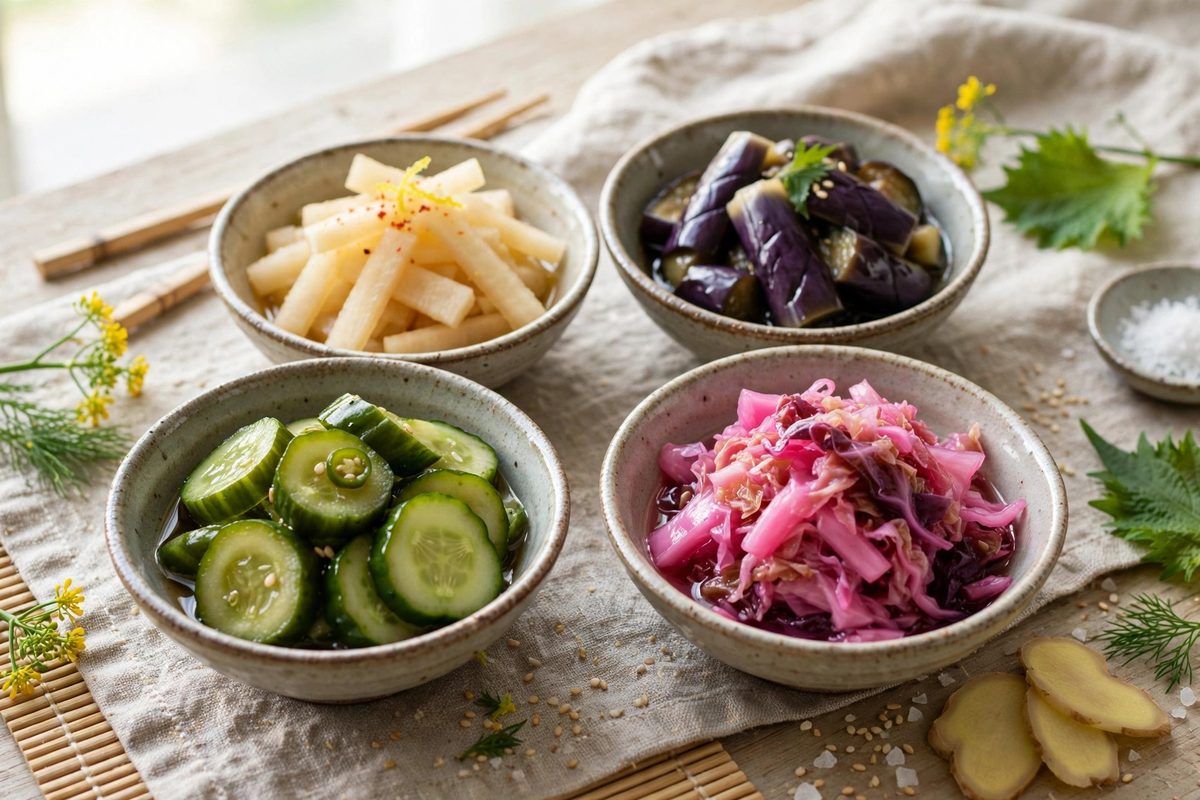
Japanese Pickles — Tsukemono at Home
An introduction to Japanese pickles (tsukemono): salt pickles, miso pickles, and quick pickles you can make today.
What tsukemono are
Tsukemono are Japanese pickles: vegetables preserved in salt, rice bran, miso, vinegar, or soy sauce. They are served in small portions alongside rice and soup, and they add salt, sourness, crunch, and colour to a meal. There are hundreds of kinds, from crisp cucumber pickles to deep, salty umeboshi plums, and they are an everyday part of Japanese eating rather than a speciality. Pickles are also a practical way to preserve seasonal vegetables, and making them at home is simple, cheap, and satisfying.
Quick salt pickles
The easiest pickles are quick salt pickles, called asazuke. Slice cucumber, cabbage, or daikon thinly, sprinkle with salt, and leave for thirty minutes to a few hours. The salt draws out water, firms the texture, and seasons the vegetable. Add a little chilli, ginger, or kombu for flavour. These pickles are light, fresh, and ready the same day. They keep in the fridge for two or three days. Use about one teaspoon of salt per 200 grams of vegetables as a starting point, and rinse lightly if they taste too salty.
Vinegar pickles
Vinegar pickles use a sweet vinegar brine, usually rice vinegar with sugar and a little salt. Thinly sliced cucumber, carrot, or daikon in this brine is ready in an hour and keeps for a week in the fridge. A classic is sunomono, cucumber in sweet vinegar, often served with wakame seaweed. The brine should taste lightly sweet and sharp, not harsh. Vinegar pickles are refreshing, especially in summer, and they pair well with rich foods such as grilled fish or fried dishes.
Miso and soy pickles
Miso pickles, called misozuke, are vegetables buried in miso paste for days or weeks. The miso flavours and preserves them, giving a deep, savoury taste. Cucumber, aubergine, and daikon all work well. Soy sauce pickles use a similar idea with soy sauce, mirin, and sake. These pickles take longer, but they keep for weeks and develop a complex flavour. Scrape off the miso before eating, and do not reuse the miso for pickling more than a couple of times, because it becomes very salty.
Umeboshi and takuan
Umeboshi are pickled plums, intensely sour and salty, and they are an acquired taste. A single umeboshi in the centre of a rice ball or a lunch box is traditional, and it is said to aid digestion and prevent food spoiling. Takuan is pickled daikon radish, bright yellow, crisp, and sweet-sour, often served with rice and curry. Both are widely available ready-made and are worth trying before making your own, because they take weeks to prepare and need specific conditions.
Serving and storage
Serve pickles in small portions, a few slices or a small mound, alongside rice and soup. They are a condiment, not a main dish, and a little goes a long way. Store homemade pickles in clean, sealed containers in the fridge, and use clean utensils to take them out, so they do not spoil. Quick pickles last two or three days, vinegar pickles about a week, and miso pickles several weeks. Making pickles is a good way to use up vegetables before they spoil, and a small jar in the fridge adds colour and flavour to everyday meals.
Frequently Asked Questions
Are Japanese pickles healthy?
They are low in calories and add vegetables to a meal, but many are high in salt, so eat them in small portions. Quick salt and vinegar pickles are lighter than long-fermented ones.
How long do homemade pickles keep?
Quick salt pickles last two to three days, vinegar pickles about a week, and miso pickles several weeks, all refrigerated in sealed containers. Discard them if they smell off or go soft.
What vegetables pickle well?
Cucumber, daikon, cabbage, carrot, and aubergine all pickle well. Choose firm, fresh vegetables and slice them evenly so they pickle at the same rate.