Japanese Home Cooking — Everyday Meals the Ichiju-Sansai Way
How everyday Japanese meals are built: one soup, three dishes, rice, and the habits that make them simple.
The shape of a home meal
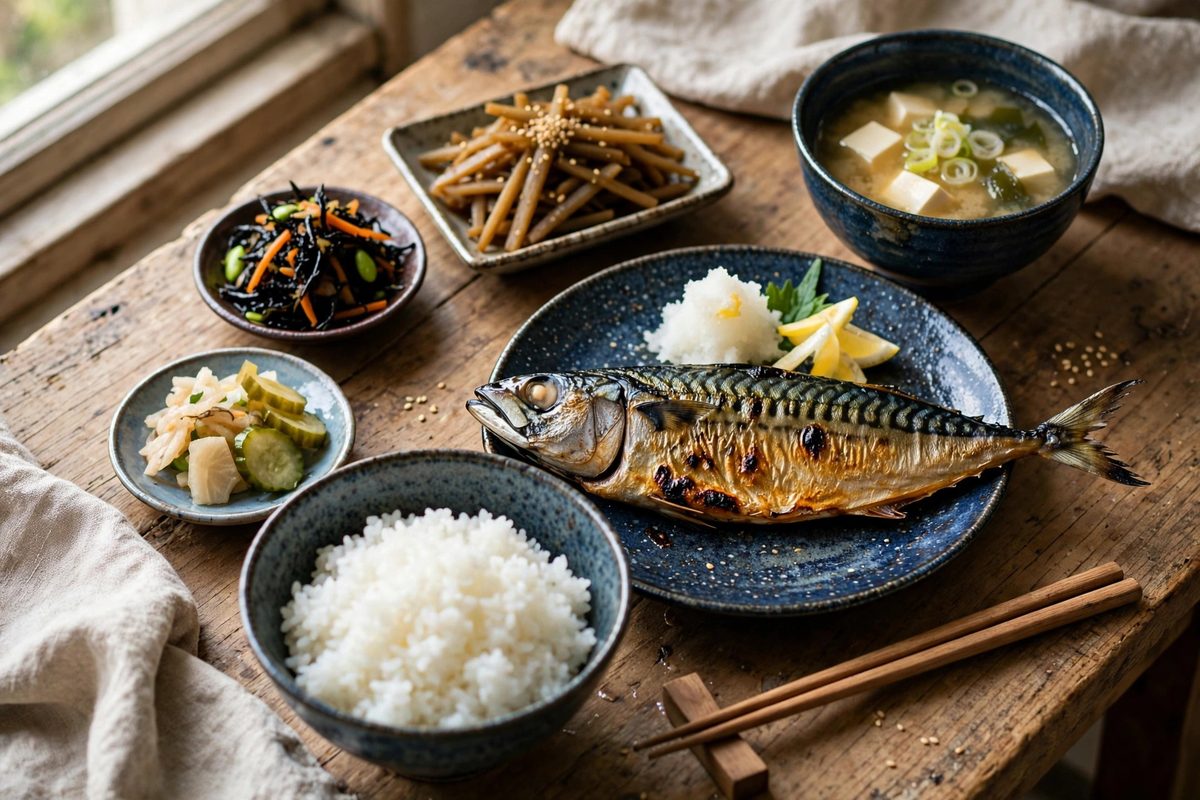
A traditional Japanese home meal follows a pattern called ichiju-sansai: one soup, three dishes, and rice. The three dishes are usually one main, often fish or meat, and two smaller sides, often vegetables, beans, or pickles. The soup is usually miso soup. This structure sounds formal, but in practice it is flexible and forgiving. The main dish can be grilled salmon or simmered chicken, and the sides can be as simple as spinach with sesame or cold tofu. The pattern gives balance without needing a recipe for every part.
Rice is the centre
Rice is not a side dish in Japanese cooking; it is the centre of the meal, and everything else is there to accompany it. Cook short-grain rice properly, keep it plain, and serve it in its own bowl. Most home cooks use a rice cooker, which gives consistent results and keeps the rice warm, but a heavy pot with a tight lid works well too. The rice and water calculator on our home page gives the right ratio. A meal built around good rice needs less effort everywhere else, because the rice itself carries the meal.
The five tastes and five colours
Japanese cooking aims for a balance of five tastes, sweet, salty, sour, bitter, and umami, and five colours, red, green, yellow, white, and black. This is not a strict rule but a helpful guide when planning a meal. A plate with grilled fish, green vegetables, yellow egg, white rice, and dark seaweed looks and tastes balanced without any extra effort. Thinking in colours helps you notice when a meal is all brown or all white, which usually means it needs a vegetable or a pickle to lift it.
Cooking methods in rotation
Home cooking relies on a small set of methods used in rotation: grilling, simmering, steaming, and raw or lightly dressed dishes. Grilled fish takes ten minutes. Simmered vegetables take twenty. A quick steamed dish takes five. Rotating these methods keeps the week varied without learning new recipes. Simmered dishes in particular are useful because they can be made ahead and taste better the next day. A pot of simmered root vegetables or hijiki seaweed in the fridge makes three days of side dishes with no extra cooking.
Seasonings you actually need
A Japanese pantry is small. The essentials are soy sauce, mirin, sake, rice vinegar, miso, dashi ingredients, sesame oil, and sesame seeds. With those eight, you can make most everyday dishes. Soy sauce gives salt and umami, mirin gives sweetness and shine, sake removes odours and adds depth, and miso gives body. Buy the best soy sauce you can afford, because it is used constantly, and keep mirin and sake in the cupboard. Once the pantry is set, the shopping list for a week of Japanese meals is mostly fresh vegetables, fish, tofu, and eggs.
Making it a habit
Japanese home cooking works best as a habit, not a project. Cook rice every day, keep miso and dashi on hand, and build meals from one main dish and two quick sides. Prep vegetables in the morning or the night before, and keep pickles or simmered dishes in the fridge as instant sides. Do not aim for restaurant presentation every night; a simple, well-seasoned meal eaten together is the point. Start with one Japanese-style dinner a week, learn the rhythm, and let it grow naturally from there.
Frequently Asked Questions
What is ichiju-sansai?
It means one soup, three dishes, plus rice. One main dish and two small sides, with miso soup, make a balanced Japanese home meal. It is a flexible pattern, not a rigid rule.
Do I need a rice cooker?
No, but it helps. A heavy pot with a tight-fitting lid also works well. The key is the right rice-to-water ratio and letting the rice rest covered after cooking.
What are the essential Japanese seasonings?
Soy sauce, mirin, sake, rice vinegar, miso, dashi, sesame oil, and sesame seeds cover most everyday dishes. Start with those before buying anything more specialised.