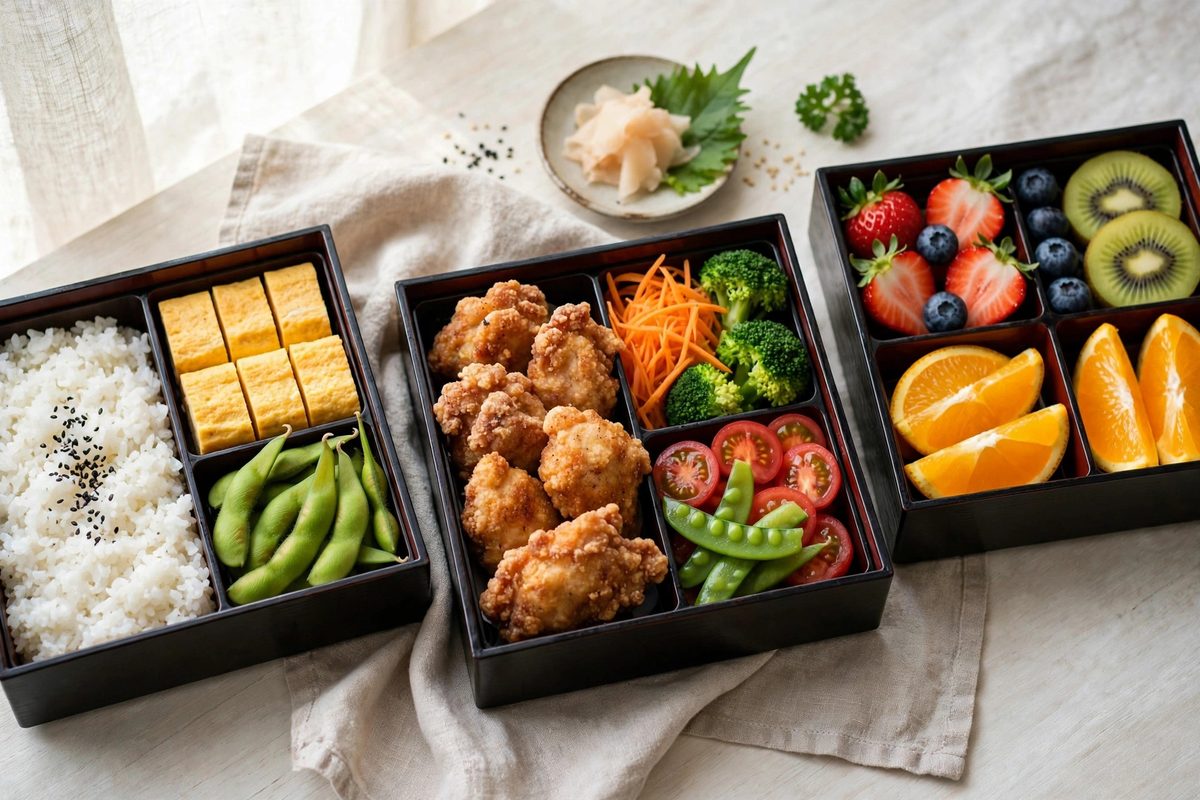
Bento Boxes — Packing a Japanese Lunch Box
How to pack a bento box: balance, colour, food safety, and easy combinations for work or school.
What a bento is
A bento is a packed meal in a box, usually with rice, a protein, vegetables, and pickles, arranged neatly in compartments. Bento are eaten at work, at school, on trains, and on picnics, and they are a daily part of life in Japan. A good bento is balanced, colourful, and compact: everything fits in one box, nothing leaks, and it tastes good at room temperature. Packing a bento is a skill, but it is a practical one, and the same principles work for any packed lunch, whether or not you use a Japanese box.
Balance and the 4:3:2:1 idea
A useful guide for a bento is a ratio of four parts carbohydrate, three parts protein, two parts vegetables, and one part pickle or fruit. In practice, that means the box is about half rice, with a main protein such as chicken, fish, or egg, a couple of vegetable dishes, and something pickled or fruity for contrast. The five colours idea also helps: include something red, green, yellow, white, and black or brown, so the box looks appealing and the nutrition is varied. A colourful bento is usually a balanced one.
Foods that pack well
The best bento foods taste good at room temperature and do not leak. Good choices include onigiri, fried chicken, rolled omelette, simmered vegetables, cherry tomatoes, blanched broccoli, and pickles. Avoid foods with a lot of sauce, which leak, and foods that need to be hot, which cool badly. Cook extra at dinner and pack the leftovers: grilled fish, simmered root vegetables, and rice all pack well the next day. Keep the rice separate from wet foods with a divider or a lettuce leaf, so it does not go soggy.
Packing tightly and safely
Pack the box tightly, with no gaps, so the food does not move around. Start with the rice, then add the main dish, then fill the gaps with small vegetable dishes and pickles. Use small silicone cups for wet or loose items. Food safety matters: cool hot food completely before closing the lid, keep the bento cool with an ice pack if you cannot refrigerate it, and eat it within four hours. Wash the box and utensils well after use. A tightly packed, cool bento is safe and tastes better than a loose, warm one.
Easy combinations
Three reliable combinations are: onigiri with fried chicken and cherry tomatoes; rice with teriyaki salmon, spinach, and pickles; and rice with a rolled omelette, simmered carrots, and edamame. Rotate these through the week and vary the vegetables with the seasons. For children, use small portions, familiar foods, and a little colour: a cherry tomato, a piece of fruit, and a favourite protein. Keep the box simple at first and add variety as packing becomes a habit.
Boxes and tools
A bento box with compartments and a tight lid is the main tool. Wooden or plastic boxes both work; choose one that fits your usual portion and is easy to wash. Silicone cups, small containers for sauce, and a pair of chopsticks complete the kit. You do not need a special box to start: any small, compartmented container works. The point of a bento is not the box but the balance and care inside it. Pack it the night before when you can, so the morning is easy.
Frequently Asked Questions
How long does a bento keep safely?
Eat it within about four hours if it is kept at room temperature, and sooner in hot weather. Use an ice pack and refrigerate when possible. Cool hot food fully before closing the lid.
What foods should I avoid in a bento?
Avoid very saucy foods that leak, foods that must be served hot, and mayonnaise-heavy dishes in warm weather. Choose foods that taste good at room temperature.
Can I pack a bento the night before?
Yes. Pack it the night before and refrigerate it, then bring it to room temperature before eating, or eat it cold. Rice firms up in the fridge, so allow time for it to soften.